How We Built an
AI Startup in 48 Hours
Every product decision and tech choice we made as a non-technical couple to go from 💍 to the wedding planner of our dreams.
Scratch Your
Own Itch
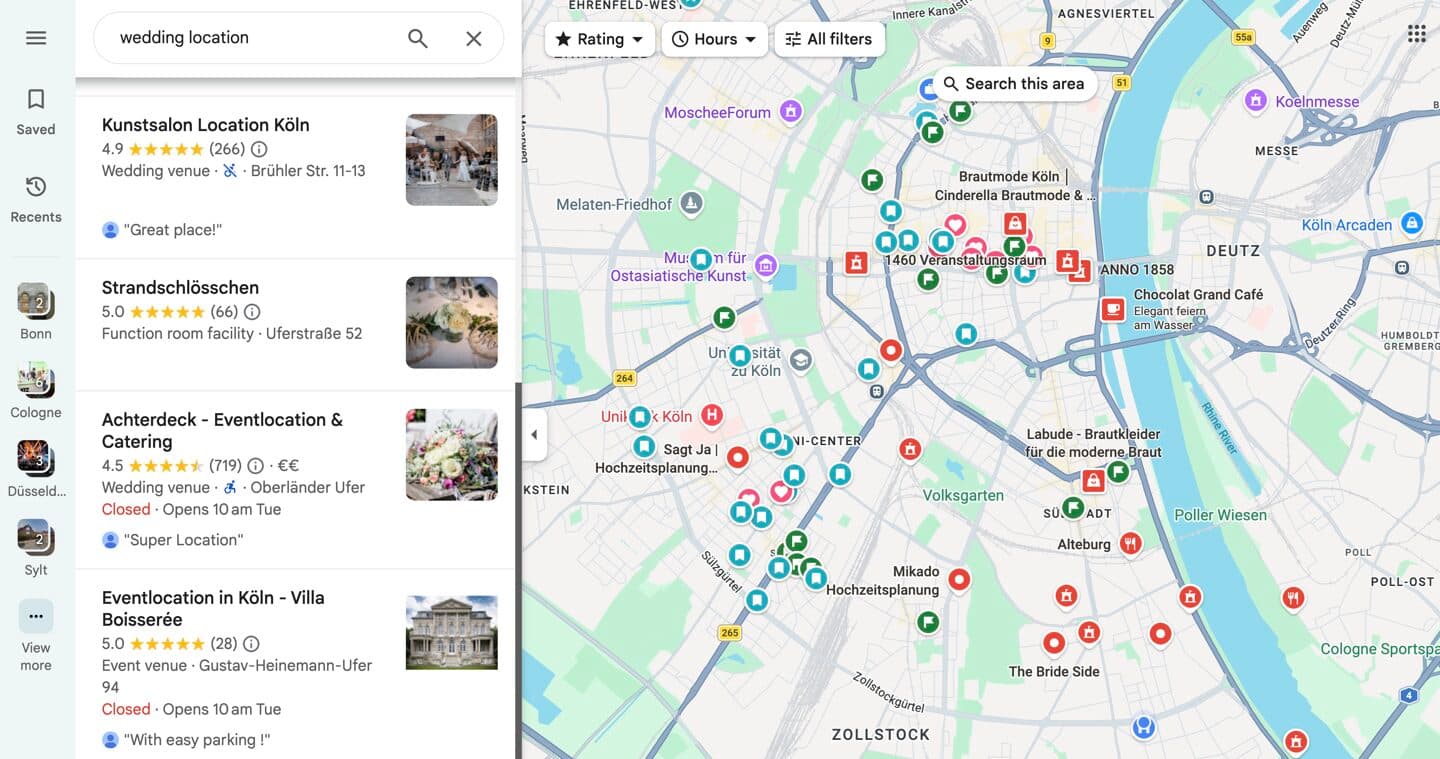
Christina spent weeks planning our wedding. Every evening after work, scrolling through the same generic results. She tried Bridebook — it had a to-do list but was missing key features she needed. WedStay looked promising but was US-only. Not an option for a German wedding.
Hundreds of locations. No personalization. Mainstream catalogs, no niche finds. Hours of manual research every single evening — and still no closer to finding the place that actually matched our dream.
Then one morning, she told me about it. And my brain did what it always does — it went straight to: How would this look in the AI world?
What if instead of scrolling through generic catalogs, you could just describe your dream wedding to an AI that actually understands you? What if it remembered your preferences across every conversation? What if it searched for niche locations nobody talks about online, visualized your ideas before you ever visited a venue, and helped you plan the whole thing — not just one piece?
The Vibe Hackathon Cologne was two weeks out. Perfect timing. Because in a normal busy week, this kind of thing never gets built. You need a forcing function — a commitment, a deadline, people around you who are building too.
Jason Fried and David Heinemeier Hansson from 37signals embrace this philosophy in their book Rework: “scratch your own itch.” Build the thing you wish existed. You already know the problem intimately. You are the target user. The feedback loop is instant because you're building for yourself.
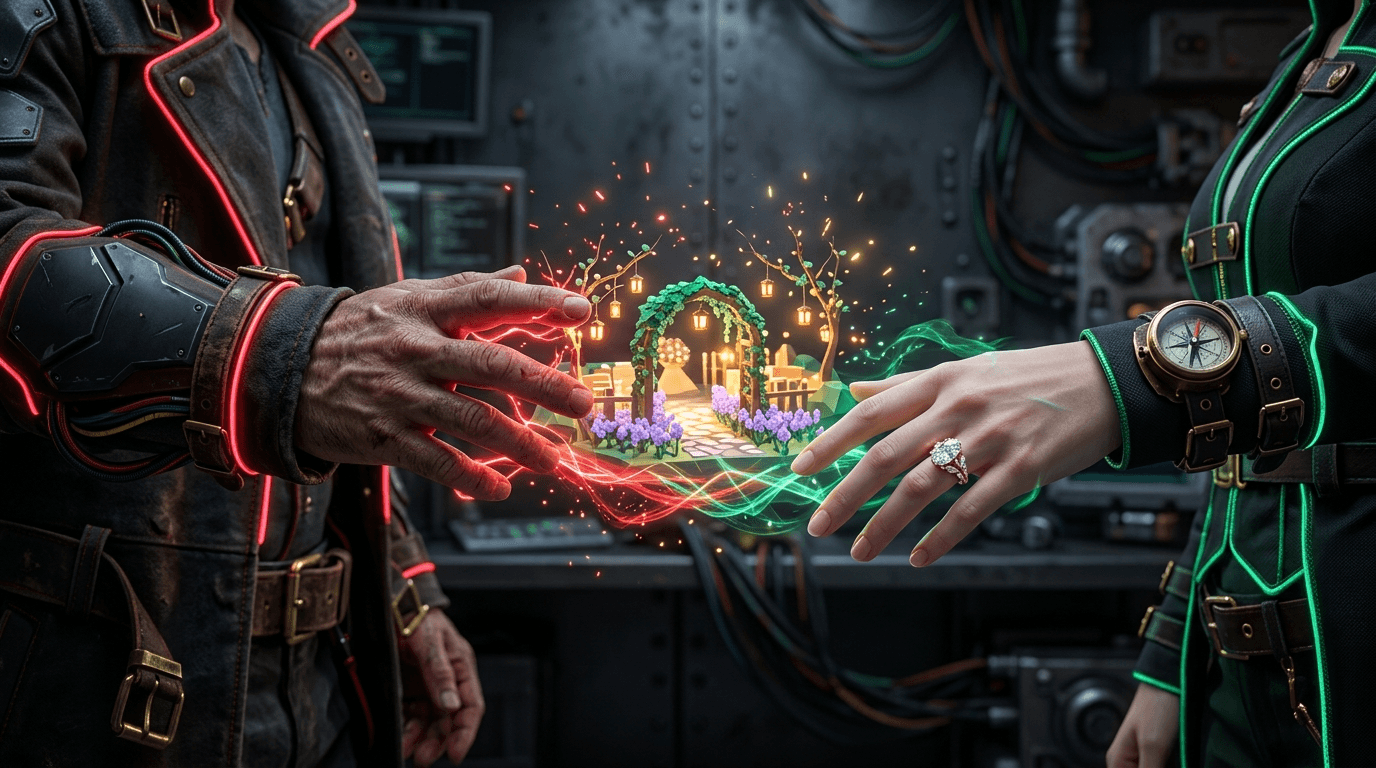
So that's what we did. We signed up for the hackathon. As a couple. With an engagement ring and an idea.
The Product
We Wanted to Use
Wedding apps today are glorified catalogs. Scroll through locations. Check boxes. Maybe get a to-do list. It's 2026 and the experience hasn't caught up to what AI makes possible.
We didn't want to build another Airbnb-style selector. We wanted something fundamentally different: What if planning your wedding felt like talking to the most knowledgeable wedding planner in the world?
Not one long chat conversation. Something smarter. You talk to the AI about your dream wedding — your style, your vibe, the food, the ceremony, the flowers — and behind the scenes, it builds what we call a wedding spec. A structured document that captures every detail, organized into categories: location, ceremony, menu, decoration, music. Every conversation updates the spec. Every preference remembered.
But here's where it gets interesting. The chat alone wouldn't have been magical. People already know ChatGPT. What if the AI could also show you your dream wedding?
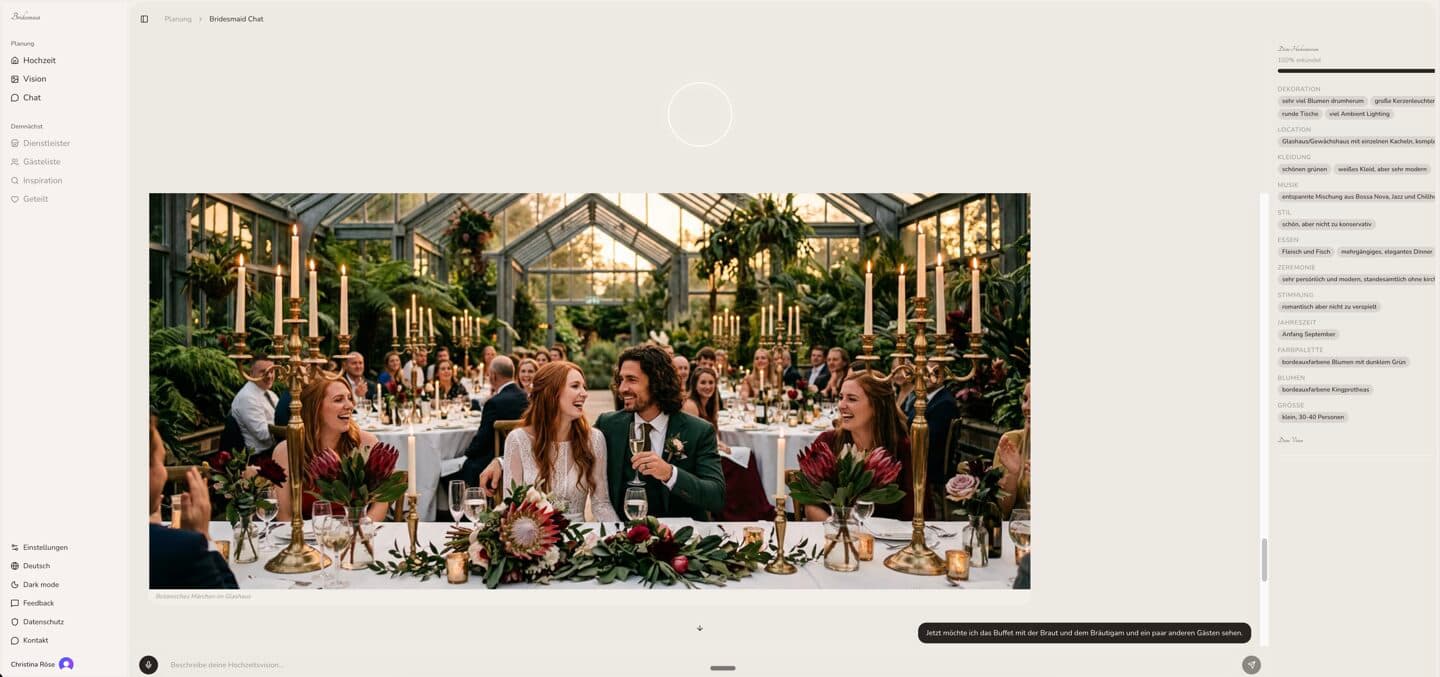
That was the product vision that made Bridesmaid different. You describe your ideal wedding through conversation. The spec updates silently in the background. Then you say “Can you visualize this for me?” — and an AI-generated image appears, matching everything you've described. The flowers, the lighting, the table setting, the venue style. All of it.
And when something's off? “Those aren't the right flowers on the table. The lighting is too cold.” Your feedback goes back into the spec, and a new visualization emerges. A continuous loop of conversation and creation.
When Christina saw the first visualization of our dream wedding, she was astonished. Not because the technology was impressive — because for the first time, something she had in her head was real and visible. That's when it stopped being my tech project and became our product.
Every Product Need
Led to a Tech Decision
I've been watching the AI development space for a year. Not randomly — tracking how specific frameworks evolved and what philosophy drove them. When it was time to build Bridesmaid, every product need mapped to a tech choice I'd already been studying.
Ship fast, scale later
Go from zero to a live product in a weekend, but with a structure that's ready when we inevitably build a native mobile app. English and German from day one.
next-forge starter template
Production-grade Next.js monorepo with auth, payments, email, and i18n pre-wired. Cleanly separates the product app, marketing site, and API.
A conversation that does things
The chat shouldn't just answer questions. It should build your wedding plan, remember what you said last time, and create things for you — images, lists, suggestions.
AI SDK for chat engine
Streaming, tool calls, agent workflows, and multi-model orchestration through one interface. Switch AI models by changing a single line of code.
Chat that feels like ChatGPT
People already know how a good AI chat looks and feels. Messages that appear smoothly, a clean input field, the feeling that you're talking to something intelligent.
AI Elements for chat UI
Pre-built chat component library. Smooth message streaming, multiline input, natural response animations. All out of the box, no custom styling needed.
Use the best AI for each job
Not every task needs the same AI. The wedding conversation needs a smart one. Quick background tasks need a fast one. Image creation needs a creative one.
AI Gateway for model routing
One integration point, any AI model. Claude Sonnet handles conversations. Claude Haiku runs fast background tasks. We can swap or add models without touching the product.
Talk, don't type
Brides don't want to type essays about their dream wedding. They want to talk — like sending a five-minute voice message on WhatsApp. That's the natural interface.
Real-Time Scribe for speech-to-text
Converts speech to text in real time. You talk to your wedding planner, see the words appear, and the AI starts working with what you said immediately.
Show me my dream wedding
Don't just describe the plan — show me what it looks like. Generate images that match my taste, not stock photos from a catalog. My dream, from my own words.
fal.ai for image generation
Running the Nanobanana model for fast, high-quality results. Compositionally precise enough to nail “rustic garden arch with amber lanterns and violet flowers.”
Remember everything
When I come back tomorrow, the AI should know everything we talked about. Every preference, every image, every conversation. Nothing gets lost between sessions.
Neon as database
Serverless PostgreSQL with instant branching. Scales to zero when nobody's planning, spins up the moment they start chatting. Conversations, specs, and images all persisted.
Two people, one wedding
Both of us sign up with our own accounts, but we plan the same wedding together. We both see the same conversations, the same images, the same plan — always in sync.
Clerk for authentication
Multi-tenant authentication. Individual logins linked through shared organizations. Role-based access and session management — zero auth code written by us.
Try it free, pay when you love it
Couples should experience the magic before paying anything. No credit card upfront, no pressure. Fall in love with the product first, then decide to subscribe.
Stripe for payments
Subscriptions with a 7-day free trial. Checkout, billing portal, and webhook handling — all pre-wired through the next-forge template we started with.
Build it all in a weekend
Two people, one weekend, an entire product. We needed an AI coding partner that could keep up with the speed of our ideas and turn them into a real, working app.
Claude Code inside Cursor
AI-assisted development from first commit to production deploy. We sat side by side, building in parallel, shipping features in real time throughout the weekend.
Ten tools, one weekend, a live product. If you map that against our AI Skill Path, this stack sits squarely at Level 4 — multi-model orchestration, custom AI agents, production deployment. But none of this mattered until Christina sat down next to me and told me what to build.
Christina's Hackathon
Experience
Hi, this is Christina.
I have a psychology background. I'm intuitive, creative — the opposite of Ben's analytical mind. Getting into this whole world of building software wasn't natural for me at all. But people can tell you things all day long — you have to experience them yourself. And that I did.
At the hackathon, we were both vibe coding — I focused more on the design side, shaping how the product looks and feels. I know exactly what future brides need because I am one. Every feature, every interaction, every screen — I built and tested it as the target user. We kept switching screens, giving each other feedback, shaping the product together. All those weeks of frustration with existing apps? That became our blueprint.
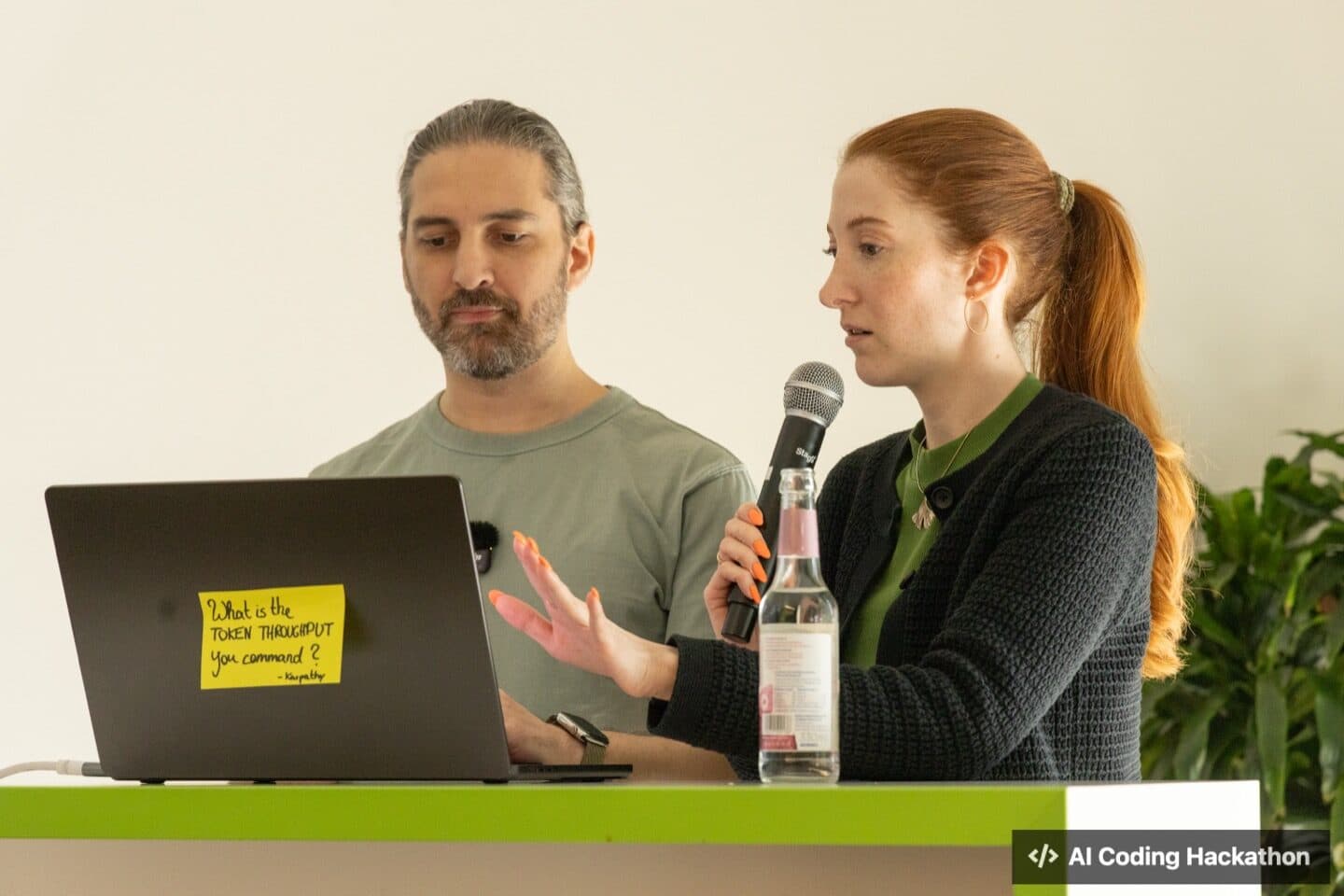
Then Ben showed me the first AI-generated visualization of our dream wedding and I was astonished. For the first time, something I had only in my head was real and visible. That's when it stopped being his tech project and became our product.
I know I'm just at the beginning. But I already learned so much that I wouldn't want to change anything about this journey. Going from someone who spent weeks searching for the right app to someone who's actually building it — that feeling is so freeing. And it's not just for me. I want to help other brides have the tool I wish I'd had from day one.
What I'd build next? The feature that started it all — AI-powered venue matching. After weeks of searching, I eventually found my perfect venue — a villa where you can bring your own people, your own food, your own everything. It took me forever to find it. Now imagine describing your dream venue in the app and it just shows you the places that match. The ultimate test for me? I'll describe exactly what I was looking for and see if the app finds that villa on its own.
The Honest
Weekend Recap
Not everything went as planned. The AI coding tools kept trying to build their own versions of components instead of using what I asked them to use — burned hours on unnecessary back-and-forth. Pushing to production broke everything: domain switching, environment variables, redirect bugs. Everything worked on my machine but not on Vercel. And the magic feature — the AI visualization — came together 30 minutes before the deadline.
Things we had to cut: social media setup, ad campaigns, onboarding flows, half the features on our list. And here's the honest part that hurts. In the Pirate Launch Plan, I recommend a clear order: build the magic interaction first, then reach out to first contacts. I didn't follow my own advice. I set up Stripe, auth, the full app scaffolding — things that had zero necessity on day one. Why? I'm so rarely in the position of being the builder and not the marketer that I just enjoyed it for the weekend.
But bridesmaid.love is live. You can sign up, chat with your AI wedding planner, and visualize your dream wedding. We demoed it as a couple at the hackathon and the magic interaction worked. If you're planning your own build weekend — build the magic interaction first. Marketing second. Stripe later.
Cheers, Ben
Ready to Go Deeper?
Don't miss the next Insight
Join the crew and get fresh perspectives delivered weekly.
Free account. No spam. Unsubscribe anytime.
Questions & Answers
Do I need to be technical to build something like this?
What tools did you use to build Bridesmaid?
What's the Vercel AI SDK and why does it matter?
How much did this cost to build?
Can I really build something in 48 hours?
What is Bridesmaid and where can I try it?
What's the 'magic interaction' you keep mentioning?
What's next-forge and why did you choose it?
How did you generate the wedding visualization images?
What would you do differently next time?

Founder from Cologne with 15 years of startup experience across 9 ventures. After helping thousands master growth marketing, Ben learned vibe coding from scratch and launched CaptAIn within three months. He leads the Vibe Coding Cologne community, blending real founder experience with teaching clarity.