
What we talk about
The topics that position us as the go-to problem solver
1. Goal
Let's identify the themes and topics that will position you as the authority in your space. This isn't about creating content for content's sake–it's about strategically choosing what you talk about to build trust, demonstrate expertise, and attract your ideal audience.
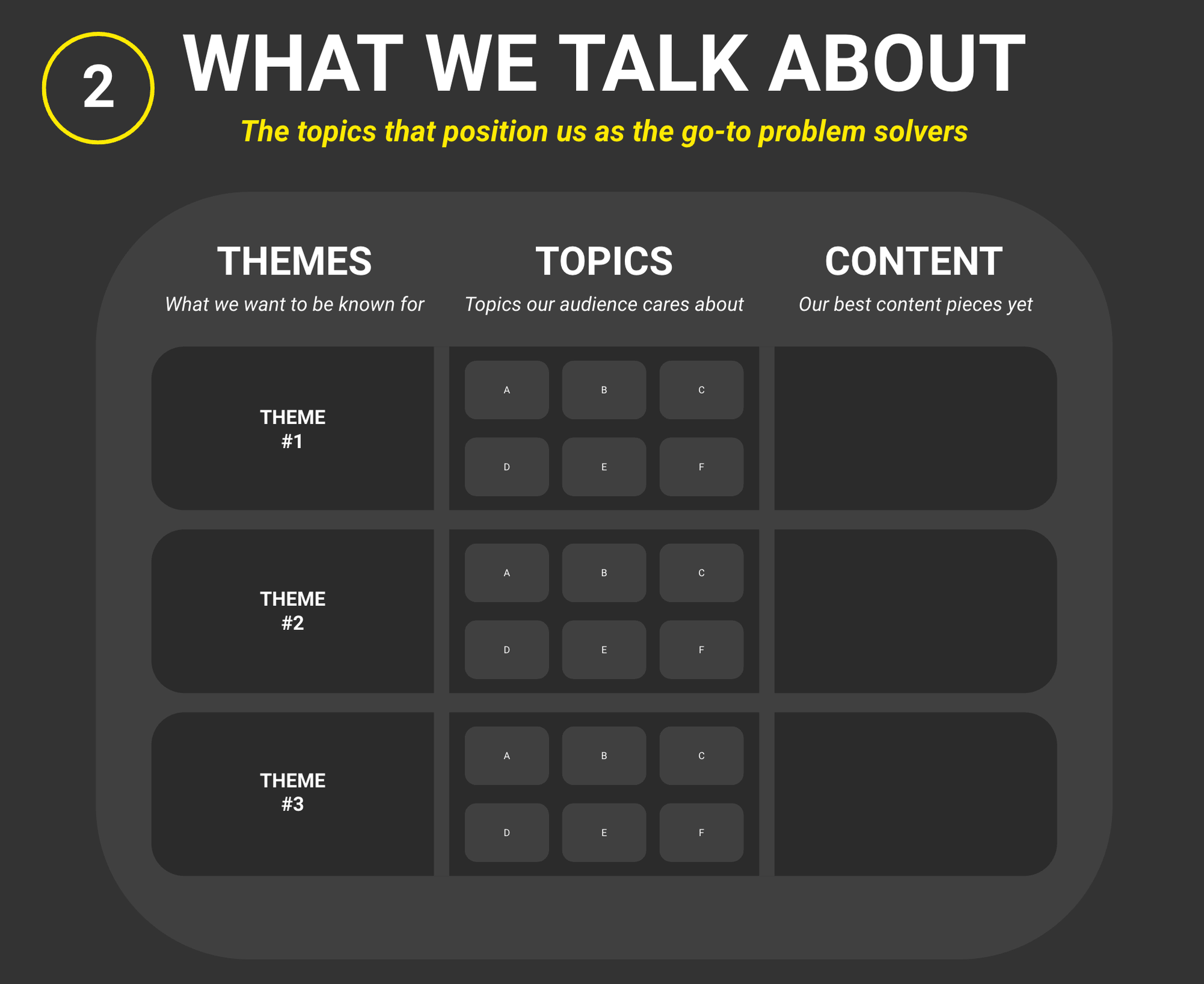
2. Themes - What we want to be known for
Themes are the big umbrellas under which all your content lives. They represent the core areas of expertise you want to be known for. Good themes are broad enough to give you creative freedom, but specific enough to maintain focus and build authority.
Continue in the same Claude conversation. We're building on the story framework we established in the previous lesson (audience, challenges, differentiation, solutions, transformation).
Identify Your Core Themes
Think about the main areas where you want to be recognized as an expert. These should align with your differentiation and the problems you solve. Most brands have 3-5 core themes.
Ensure Alignment
Your themes should connect directly to:
- Your audience's challenges and goals
- Your unique differentiation
- The transformation you create
- Your business objectives
Outcome: You have identified your 3-5 core content themes that align with your brand and audience needs.
3. Topics - Topics our audience cares about
Once you have your themes, it's time to get specific with topics. Topics are the specific subjects, questions, and interests within each theme that your audience actually cares about. These are what you'll create individual pieces of content around.
Continue in the same Claude conversation. We're building on the themes we just identified.
Research What Matters
Don't guess what your audience cares about–research it:
- What questions do they ask?
- What problems do they Google?
- What discussions are happening in communities?
- What content gets engagement in your space?
Map Topics to Themes
For each theme, identify 10-15 specific topics that:
- Address real audience questions or problems
- Have search volume or demonstrated interest
- Allow you to showcase your expertise
- Support your audience's journey toward their goals
Outcome: You have a comprehensive list of 10-15 topics per theme that your audience actively searches for and cares about.
4. Content - Our best content pieces yet
Before creating new content, collect examples of great content that aligns with your themes. This gives you a reference library of what works–both your own best-performing pieces and standout examples from others in your space.
Collect Your Best Content
Start by gathering your own top-performing content pieces:
- Blog posts, videos, or social content that performed well
- Content that aligns with your identified themes
- Pieces that resonated with your audience
- Different formats that worked (long-form, short-form, video, etc.)
Find Great Examples from Others
Look for standout content from others in your space:
- Content creators or brands that excel in your themes
- Pieces that demonstrate what great content looks like for your topics
- Examples that inspire you or show effective approaches
- Content that your audience engages with or shares
Organize by Theme
Create a collection organized by your themes:
- For each theme, gather 3-5 great examples
- Mix your own content with examples from others
- Include a mix of formats (blog, video, social, etc.)
- Note what makes each piece effective
This collection serves as your reference library–when you're creating new content, you can look at these examples to understand what works for your themes and audience.
Outcome: You have a collection of great content examples for each theme that serves as a reference for creating new content.
5. Summary
You've now defined what you talk about:
- Identified your themes - The 3-5 core areas you want to be known for
- Generated topics - Specific subjects within each theme that your audience cares about
- Collected content examples - Gathered great sample pieces for each theme as a reference
Outcome: You have a comprehensive summary of your themes, topics, and content examples that guides your content creation.
This positions you to create content that resonates. In the next lesson, we'll explore how to package and deliver your content across different funnel stages (ToFu, MoFu, BoFu).
Further Resources
Dig deeper into content strategy
Books:
- Superfans by Pat Flynn
- YouTube Secrets by Sean Cannell
- $100M Leads by Alex Hormozi
- The Art and Business of Online Writing by Nicolas Cole
- Oversubscribed by Daniel Priestley
Online:
Tools: