Not Zero-Human,
But Augmented-Human
The world doesn't need more soulless slop. We need focused, AI-empowered teams who can build the things only they would dare to build.
The Zero-Human
Trap
“Zero-Human Company” is the loudest idea in AI right now. And honestly? The frustrations behind it are real.
Managing humans is distracting. Before strong product-market fit, most hires are plus-minus-zero – they can barely pull their own weight, they need funding, and getting to traction is sometimes harder with 15 people than with 3. If your business model still scales through humans, you've missed the last 30 years of software and media leverage.
Keeping your team as small as possible is absolutely a goal.
But small teams have always faced one brutal trade-off: grow big and slow to match your ambitions, or stay small and scale them back.
Zero-Human looks at that and says “remove the humans entirely.” That's an overreaction. It strips out the ambition, the taste, the soul. The result is more soulless slop in the world.
Our products are for humans. Building alone gets old fast – even for a self-described lonely wolf who now sees what happens when Christina gets augmented by AI and watches how that elevates the value she brings to the business. That's not something to automate away.
The zero-human crowd gets a few things right. They see the direction – AI changes the math of what a small team can achieve. They see that hiring by default is a trap. And they're provocative enough to start the conversation.
But what they get wrong is the conclusion. The problem was never too many humans. It was the forced choice small teams always faced – grow big and slow, or stay small and think small.
AI breaks that trade-off. But only if you use it to empower the humans you have – not to replace them.
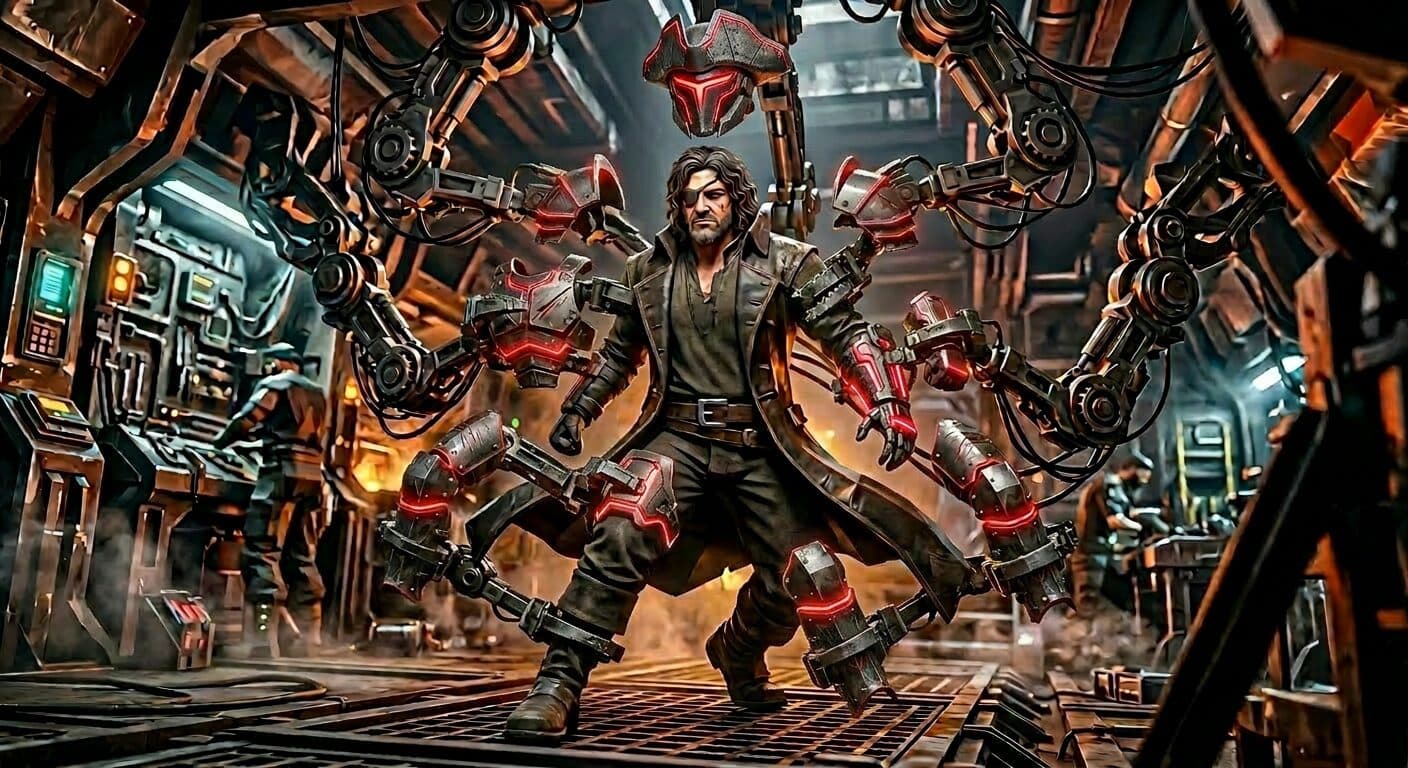
“It's less Iron Man robots and more Iron Man suits that you want to build.”
You don't build robots. You build suits. The human is still the point. AI is what you build around them so they can do things they couldn't do alone.
The Augmented-Human
Company
The question isn't “how do I need fewer people?” It's “how do I make each person more powerful?”
An Augmented-Human Company is a small, focused crew where AI removes what was holding each person back – so they can give the contribution only they can give. The kind of contribution where, without them, the project wouldn't have come out the way it did.
The human acts as the guidepost. Sets the left and right limits. Quality control. Makes sure the output still has soul, isn't slop, and produces real value for the customer.
This isn't about making more money per person – that's a direction, not a credential. And it's not about humans being overhead to optimize. Humans are the point.
AI augmentation increases the probability of more humans being able to contribute in that irreplaceable way.
The goal is enabling each person to give the unique contribution only they can give – so a small crew can pursue genuinely ambitious work without becoming the big, slow, corporate thing they started a company to avoid.
This idea didn't appear out of nowhere. It's been building for over a decade.
Rob Walling
“Start Small, Stay Small” – the foundational book for bootstrapped SaaS. You don't need VC. A 1–3 person team can build a real business. Founded MicroConf.
Naval Ravikant
Leverage theory: labor, capital, code, media. Individuals with code + media leverage can build at scale without employees.
Sam Altman
“One-person unicorn” prediction – a betting pool among tech CEOs for the first year a one-person billion-dollar company exists.
“The Two-Slice Team” – one person owns one product, AI writes ~99% of code. 15 people, 5+ products, 7-figure revenue.
In 2010, Rob Walling's argument was: stay small because you can be profitable without VC. Lifestyle and freedom are the reward.
In 2026, the argument has changed: stay small because a focused, AI-empowered crew can now pursue work that used to require a much bigger team. The forced choice between ambition and staying small has been broken.
Same recommendation. Different argument. Radically different scale of what “small” can achieve.
The Evidence Is
Already Here
This isn't theory. These companies exist today – small teams, real revenue, heavy AI augmentation.
Notice the pattern. None of these teams set out to minimize headcount as a goal. They set out to build something ambitious – and discovered that a small, focused, AI-empowered crew could get there without growing the org chart.
$1M per year per employee isn't a fantasy. It's a realistic target for teams that stay disciplined about who they bring on and how they use AI.
The Repeat
Layer
Build. Grow. Repeat.
“Repeat” in Build · Grow · Repeat isn't iteration. It's the organizational layer that makes Build and Grow sustainable – and it's what changed.
What's different now: we can document every process as agent skills that execute exactly the way we want. We can multiply output with Claude, Claude Code, Codex. We can schedule workflows with built-in AI tools or autonomous agents like OpenClaw that handle work a team member would otherwise need to do.
The human stays in control – setting the guardrails, ensuring quality, making sure there's soul in what comes out. That's what makes this scaling operations, not just automation.
The takeaway for founders: you don't have to run to an angel investor to fund a big team. You can build something genuinely strong with a few people you actually want to work with – without compromising on who's on the crew.
And if traction comes and you decide to seek investors later, being small with high revenue per employee is exactly what makes you attractive. $1M per year per employee isn't a fantasy – Oleve, Typefully, and Papermark are already there or close. That's a realistic target.
This is the new way to build companies. Not zero-human. Not bloated. Small, focused, AI-empowered crews who can finally pursue the ambitious work they started a company to do.
Cheers,
Ben
Ready to Go Deeper?
Don't miss the next Insight
Join the crew and get fresh perspectives delivered weekly.
Free account. No spam. Unsubscribe anytime.
Questions & Answers
What's the difference between Zero-Human and Augmented-Human?
Do I need to be technical to build an augmented team?
Is $1M ARR per employee realistic?
What does Karpathy's 'Iron Man Suit' mean in practice?
How is this different from the 'Tiny Teams' concept?
What about when you need to scale? Doesn't staying small limit you?
What's the 'Repeat' layer in Build Grow Repeat?
I'm a solo founder. Does this apply to me or only to teams?
How does this connect to the previous article about OpenClaw?
What's the relationship between Rob Walling's 'Start Small, Stay Small' and this?
Founder from Cologne with 15 years of startup experience across 9 ventures. After helping thousands master growth marketing, Ben learned vibe coding from scratch and launched CaptAIn within three months. He leads the Vibe Coding Cologne community, blending real founder experience with teaching clarity.