
How we get there
Our most important projects to achieve our goals
GOAL
Turn growth objectives into actionable projects using the six core areas of growth marketing: Growth Roadmap, Content & Story, Funnel Building, Data Analytics, Traffic Generation, and Conversion Optimization.
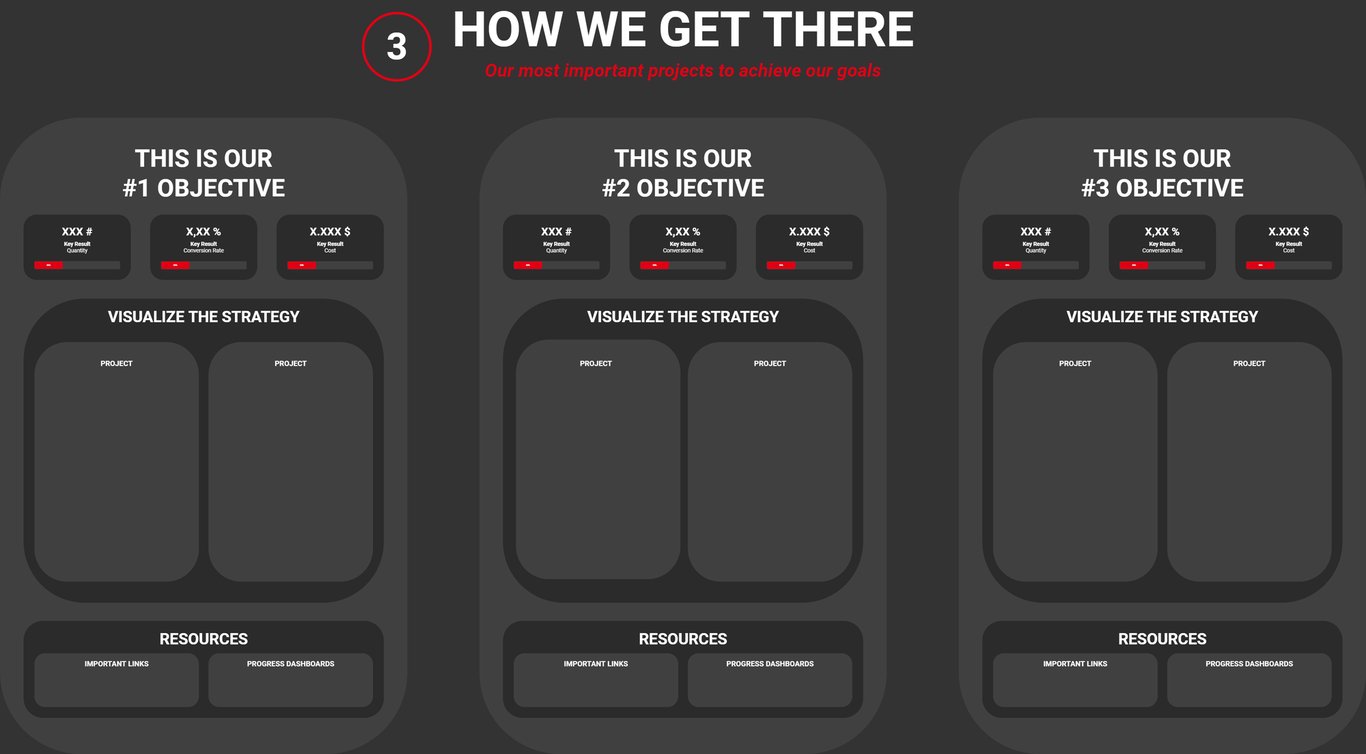
OBJECTIVES
Turn Growth Objectives into Actionable Projects
Take your OKRs and break them down into specific projects. Each project should be a concrete initiative that moves you toward your key results.
Growth Opportunity Checklist
Use a structured checklist to evaluate and prioritize growth opportunities. This ensures you're focusing on the highest-impact projects.
3.1 Turn growth objectives into actionable projects
Then comes Step 3–making our game plan. This is where we take those lofty goals and chisel them into actionable tasks. We use the six core areas we're masters at: Growth Roadmap, Content & Story, Funnel Building, Data Analytics, Traffic Generation, and Conversion Optimization.
From Goals to Projects
Your OKRs define what you want to achieve. Now you need to figure out how to achieve them. Each key result needs one or more projects that will move you toward it.
Project Structure
Each project should have:
- Clear objective - What key result does this project support?
- Specific actions - What exactly will you do?
- Success metrics - How will you measure progress?
- Timeline - When will this be completed?
- Owner - Who is responsible?
Mapping to Core Areas
As you create projects, map them to the six core areas of growth marketing. This helps ensure you're covering all aspects of growth and not just focusing on one area.
For each key result in your OKRs, identify the specific projects that will help you achieve it. Be concrete and actionable.
Categorize your projects into: Growth Roadmap, Content & Story, Funnel Building, Data Analytics, Traffic Generation, or Conversion Optimization.
For each project, specify how you'll measure success and when you expect to complete it. Make it measurable and time-bound.
3.2 Growth Opportunity Checklist
A well-structured growth opportunity checklist keeps us on point, and these six Pirate Skills core topics are our North Star. Use this checklist to evaluate potential projects and prioritize the ones that will have the biggest impact.
Evaluation Criteria
When evaluating growth opportunities, consider:
- Impact - How much will this move the needle on your key results?
- Effort - How much time and resources will this require?
- Feasibility - Can you actually execute this with your current resources?
- Alignment - Does this support your OKRs and company vision?
- Timing - Is now the right time for this project?
Prioritization Matrix
Create a simple matrix:
- High Impact, Low Effort - Do these first (quick wins)
- High Impact, High Effort - Plan these carefully (major initiatives)
- Low Impact, Low Effort - Do these if you have time (nice to have)
- Low Impact, High Effort - Avoid these (not worth it)
Growth Opportunity Checklist
For each potential project, ask:
- Does this project directly support one of our key results?
- Can we measure the impact of this project?
- Do we have the resources to execute this project?
- Is this aligned with our company vision?
- Is this the right time for this project?
- Does this leverage one of the six core areas effectively?
- Will this create sustainable growth, not just a one-time boost?
Go through each project idea and evaluate it against the checklist criteria. Be honest about impact, effort, and feasibility.
Rank your projects based on their potential impact and required effort. Focus on high-impact initiatives first.
From all evaluated projects, choose the top 3-5 that will have the biggest impact on your key results. Focus is key.
Summary
You've now created a battle plan to achieve your goals:
- Turned objectives into projects - Each key result has specific, actionable projects
- Mapped to core areas - Projects are organized across the six core areas of growth marketing
- Prioritized effectively - You're focusing on high-impact projects that align with your goals
This foundation sets you up perfectly for the final step: assigning ownership and resources. In the next lesson, we'll ensure everyone knows their role and has what they need to execute.
Further Resources
Dig deeper into project planning
Books:
Online:
- Growth Hacking Resources
- Project Management Tools - Tools to track your growth projects